Egg Donation in the Hudson Valley: A Powerful Way to Help a Family and Get Compensated
Learn how Hudson Valley Fertility supports egg donors ages 18–29. Discover how local college students and young women can help families achieve parenthood while receiving compensation. Becoming a parent is a lifelong dream for many individuals and couples, but for some, medical challenges make that journey difficult. Egg donation offers a meaningful solution, and for young women in the Hudson Valley, it’s also an opportunity to make a lasting impact while receiving financial compensation.At Hudson Valley Fertility, egg donors play a vital role in helping families achieve their goal of parenthood. This guide explains how egg donation works, who can become a donor, and why local college students and young women ages 18–29 are uniquely positioned to help.

What Is Egg Donation?
Egg donation is a medical process in which a healthy woman provides her eggs to help another person or couple conceive. These eggs are used in in-vitro fertilization (IVF), where they are fertilized and then transferred to the intended parent or surrogate.For families struggling with infertility, egg donation can be life-changing. For donors, it’s a chance to contribute something truly meaningful, while also being compensated for their time and commitment.
Who Can Become an Egg Donor in the Hudson Valley?
Hudson Valley Fertility welcomes applications from young women who meet specific health and lifestyle criteria. Ideal candidates typically include:- Women ages 18–29
- Local college students or young professionals
- Non-smokers with a healthy BMI
- No significant hereditary medical conditions
- Willingness to attend appointments in the Hudson Valley
College students often make excellent egg donors because they are generally in good health, flexible with scheduling, and motivated to help others while managing educational expe nses.
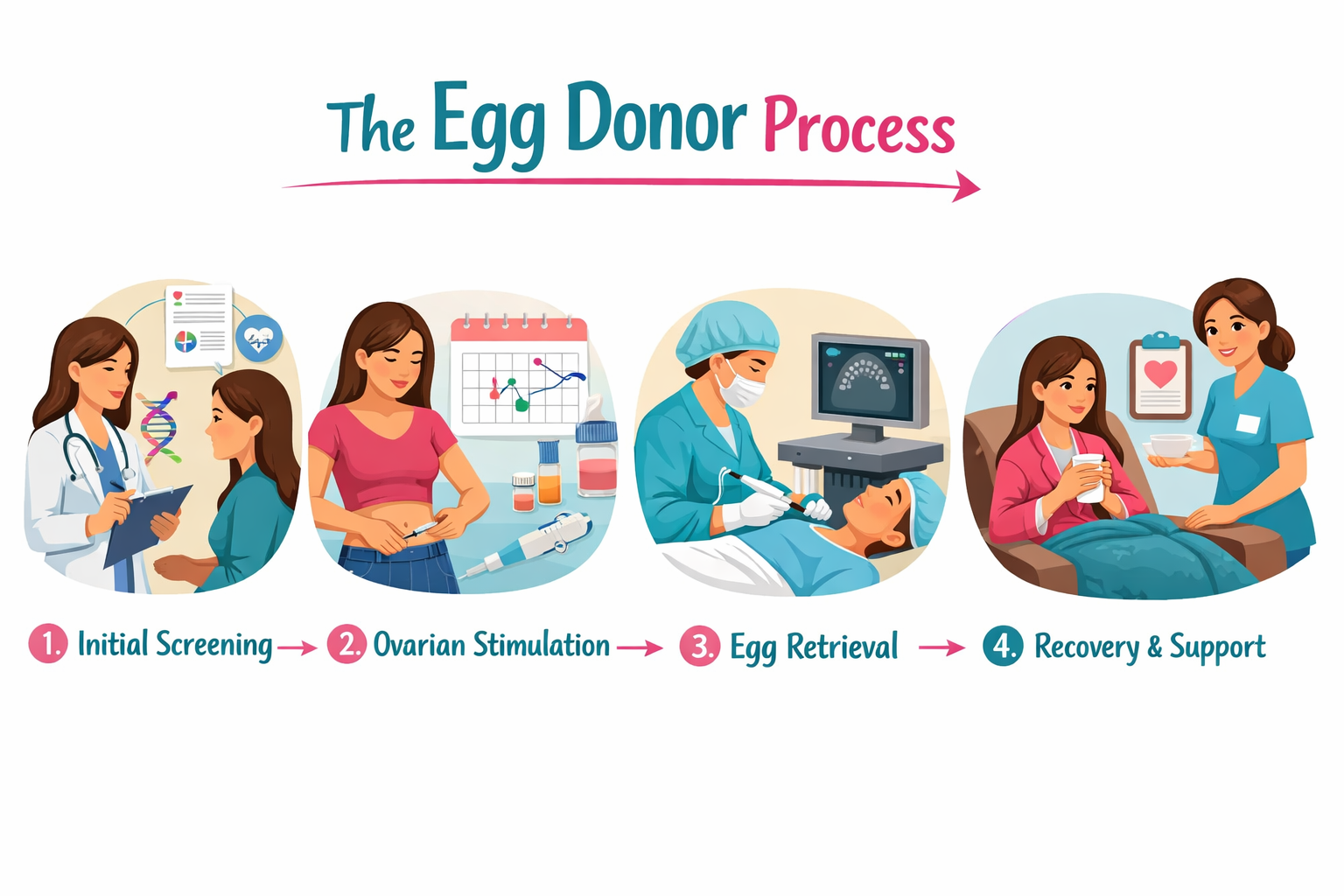
The Egg Donation Process at Hudson Valley Fertility
The egg donation journey is carefully guided by experienced fertility specialists to ensure donor safety and comfort at every step.1. Initial Application & Screening
Potential donors complete an application and undergo medical, genetic, and psychological screenings to ensure eligibility.2. Cycle Preparation
Approved donors take short-term fertility medications to stimulate egg production. These are carefully monitored through bloodwork and ultrasounds.3. Egg Retrieval
Egg retrieval is a minor outpatient procedure performed under light sedation. Most donors return to normal activities within a day or two.4. Recovery & Follow-Up
Hudson Valley Fertility provides ongoing support and post-cycle check-ins to ensure donor well-being.Compensation for Egg Donors
Egg donors are financially compensated for their time, commitment, and generosity. Compensation varies but often helps donors:- Pay for college tuition or student loans
- Cover rent, books, or living expenses
- Build savings or reduce financial stress
Importantly, compensation is provided regardless of the outcome of the IVF cycle, as long as the donor completes the agreed-upon process.
Why Donate Eggs Locally in the Hudson Valley?
Choosing a local fertility center offers clear advantages:- Fewer travel requirements
- Personalized care from a nearby medical team
- Convenient appointments around school or work schedules
- Strong sense of community impact, helping families close to home
Hudson Valley Fertility is deeply rooted in the region and known for compassionate, ethical, and donor-focused care.
The Emotional Impact: More Than Just Compensation
While financial compensation is important, many donors say the most rewarding part is knowing they helped create a family. Egg donors often describe the experience as empowering, meaningful, and deeply fulfilling.By donating eggs, you’re giving someone the chance to experience pregnancy, birth, and parenthood—something that can’t be measured in dollars alone.
FAQs About Egg Donation in the Hudson Valley
Is egg donation safe?
Yes. The process is closely monitored by fertility specialists, and donor safety is always the top priority.Will donating eggs affect my future fertility?
No. Egg donation does not reduce your ability to have children in the future.How long does the process take?
From screening to recovery, a typical donation cycle lasts about 6–8 weeks.Do I have to pay for anything?
No. All medical costs related to egg donation are covered.Can college students donate eggs?
Absolutely. Many egg donors are local college students ages 18–29.Will my identity remain confidential?
Yes. Donor privacy and confidentiality are strictly protected.Start Your Egg Donation Journey Today
If you’re a young woman in the Hudson Valley looking to make a difference, egg donation through Hudson Valley Fertility offers a unique opportunity to help a family achieve parenthood, while receiving compensation and expert medical care.Your generosity can change lives. Consider becoming an egg donor and be part of a hopeful, life-creating journey.
View our egg donor page here to learn more.
Hudson Valley fertility: 7 Heartfelt Ways to Celebrate Love and Hope This Valentine’s Day Hudson Valley fertility support is about more than medicine, it’s about community, compassion, and hope. Discover meaningful Valentine’s Day ideas tailored to local families across the Hudson Valley. Valentine’s Day is often filled with roses, candlelit dinners, and sweet notes tucked into cards. But for many couples navigating Hudson Valley fertility challenges, this holiday can stir up mixed emotions. Love is still at the center, but so is hope, resilience, and the dream of growing a family. If you’re in the beautiful Hudson Valley , you’re surrounded by more than scenic views and historic towns. You’re part of a close-knit, compassionate community. This Valentine’s Day, let’s shift the focus from pressure to partnership, and explore meaningful, local ways to celebrate love while honoring your fertility journey. Why Valentine’s Day Feels Different During a Fertility Journey Valentine’s Day can sometimes feel like it’s all about babies, growing families, and picture-perfect love stories. When you’re trying to conceive, that can be hard. Social media posts, store displays, and even well-meaning conversations can feel overwhelming. But here’s the truth: love is bigger than timelines. Whether you’re just starting treatment, exploring options, or simply having conversations about your future, your relationship deserves recognition. This season can become a powerful reminder that your bond is strong—no matter where the journey leads. Understanding Hudson Valley fertility Support and Community Resources The Hudson Valley isn’t just a postcard-perfect destination. It’s home to respected medical providers, wellness centers, and community groups that understand the emotional and physical sides of fertility care. Local Access to Compassionate Care From Poughkeepsie to Rhinebeck , couples have access to leading medical networks, including facilities affiliated with Vassar Brothers Medical Center . These centers provide reproductive health services and referrals to fertility specialists throughout the region. Many families also travel to nearby areas such as Beacon and New Paltz for holistic wellness services that complement medical treatment, like acupuncture, counseling, and nutrition support. For national guidance on fertility health, the CDC provides reliable educational resources here: https://www.cdc.gov/reproductivehealth/infertility/ Emotional Support Close to Home The Hudson Valley is known for its strong sense of community. Local support groups, faith communities, and wellness centers often host small gatherings where couples can share their experiences in a safe space. On Valentine’s Day, consider connecting with a counselor or support group if emotions feel heightened. It’s not a sign of weakness, it’s a sign of strength. 7 Meaningful Valentine’s Day Ideas for Couples Facing Fertility Challenges Instead of traditional celebrations that might feel triggering, try these thoughtful, locally inspired alternatives. 1. Take a Scenic Winter Walk Together Bundle up and stroll along the iconic Walkway Over the Hudson . The sweeping river views are breathtaking in winter, and the quiet atmosphere makes space for honest conversations. Sometimes, the best therapy is fresh air and time together. 2. Plan a Cozy Hudson Valley Staycation The Hudson Valley is known for charming inns and boutique hotels. Book a one-night getaway in a nearby town and disconnect from daily stress. Bring books, order room service, and focus solely on each other. No pressure. No expectations. Just presence. 3. Create a “Future Dreams” Date Night Light candles at home and write letters to your future family—or to each other. Share hopes, fears, and dreams. Even if the path feels uncertain, putting words to your vision can feel empowering. 4. Support Local Businesses Together Visit a local chocolatier, florist, or farm-to-table restaurant. Keeping your Valentine’s plans rooted in the Hudson Valley community adds meaning and connection. 5. Try a Couples Wellness Experience Book a massage, yoga session, or acupuncture appointment together. Many local wellness providers in Rhinebeck and New Paltz specialize in stress reduction, which can play a key role in reproductive health. 6. Volunteer or Give Back Channel your love outward. Volunteer at a local shelter or donate to a family-focused nonprofit. Giving back can help shift focus from what feels missing to what you can offer. 7. Redefine What Romance Means Romance doesn’t have to mean baby announcements or big gestures. It can mean: Holding hands during appointments Making each other laugh on tough days Saying “we’re in this together” That’s powerful love. How to Communicate with Your Partner During Fertility Treatment Open communication is the backbone of any relationship, but especially during fertility care. Here are practical tips: Schedule regular check-ins. Talk about emotions outside of medical appointments. Use “I feel” statements. Avoid blame and focus on your own experience. Allow different coping styles. One partner may want to talk constantly; the other may need quiet reflection. Both are valid. Celebrate small wins. Even scheduling a consultation can be progress. This Valentine’s Day, consider setting aside time specifically for gratitude. Tell your partner what you appreciate about them—not just in this journey, but in life. Self-Care Tips for Valentine’s Day in the Hudson Valley If the holiday feels heavy, that’s okay. You can still create a day that feels meaningful. Spend time in nature along the Hudson River. Journal your thoughts while sipping coffee at a local café. Limit social media if it feels overwhelming. Schedule a therapy session before or after the holiday. Remember: your emotions are valid. It’s okay to feel hopeful and heartbroken at the same time. The Power of Community in Hudson Valley fertility Journeys One of the greatest strengths of the Hudson Valley is its people. Neighbors check in. Friends rally around each other. Local businesses remember your name. Fertility journeys can feel isolating, but they don’t have to be. When you lean into your local support system, whether through medical providers, wellness practitioners, or community groups, you’re reminding yourself that you’re not walking alone. Valentine’s Day can become less about comparison and more about connection. Frequently Asked Questions 1. How can couples in the Hudson Valley cope with Valentine’s Day during fertility treatment? Focus on meaningful, low-pressure activities like scenic walks, wellness appointments, or quiet dinners at home. Shift the emphasis from outcomes to connection. 2. Are there fertility support resources locally? Yes. The Hudson Valley offers medical networks, counseling services, and holistic wellness providers across towns like Poughkeepsie, Rhinebeck, Beacon, and New Paltz. 3. Is it normal to feel sad on Valentine’s Day while trying to conceive? Absolutely. Mixed emotions are common. Acknowledging them instead of suppressing them can help you process the holiday in a healthier way. 4. What are some romantic but low-stress ideas for couples? Staycations, couples massages, journaling together, or nature walks are all intimate without added pressure. 5. How can partners better support each other? Communicate openly, respect different coping styles, and schedule intentional time to connect emotionally. 6. Does stress affect fertility? While stress alone doesn’t cause infertility, high stress levels can impact overall well-being. Stress-reduction techniques such as mindfulness, exercise, and counseling may support overall health. Conclusion: Celebrating Love, Strength, and Hope This Valentine’s Day, redefine what celebration means. Love isn’t measured by timelines, test results, or announcements. It’s measured by commitment, compassion, and courage. In the heart of the Hudson Valley, surrounded by river views and resilient communities, your journey is part of a bigger story, one rooted in hope. Whether you spend February 14th walking above the river, sharing a quiet dinner, or simply holding hands at home, remember this: Love is already here. And that’s worth celebrating.

How Sleep Affects Fertility: Why Rest Matters More Than You Think At Hudson Valley Fertility , we often talk with patients about nutrition, hormones, stress, and timing. One factor that is frequently overlooked, but incredibly powerful, is sleep . Quality sleep plays a vital role in reproductive health for people of all genders, influencing hormones, ovulation, sperm quality, and overall fertility outcomes. In this article, we’ll explore how sleep affects fertility, why poor sleep can make conception more difficult, and what practical steps you can take to support your reproductive goals through better rest.

Creating Your Fertility Plan for 2026: A Smart, Hopeful Approach with Hudson Valley Fertility Meta Description: Creating your fertility plan for 2026 starts with expert guidance, personalized care, and confidence. Learn how Hudson Valley Fertility helps you plan ahead with clarity and hope. Planning for a family is one of life’s most meaningful journeys. As we look ahead, creating your fertility plan for 2026 is a proactive step that allows you to align your health, goals, and timeline with expert medical guidance. At Hudson Valley Fertility , patients are empowered to plan with intention, supported by advanced reproductive care and compassionate expertise. Whether you are just beginning to think about growing your family, preserving fertility for the future, or exploring treatment options, starting early can make all the difference. Let’s walk through how to thoughtfully and confidently build your fertility plan for 2026.

Surviving the Holidays While Struggling With Infertility: Support & Hope in the Hudson Valley Learn compassionate, practical tips for surviving the holidays while struggling with infertility, with local support and guidance from Hudson Valley Fertility. The holiday season is often portrayed as a time of joy, family gatherings, and celebration. But for individuals and couples facing infertility, the holidays can feel emotionally overwhelming. From pregnancy announcements to well-meaning but painful questions, this time of year can intensify feelings of grief, isolation, and stress. At Hudson Valley Fertility, we understand how difficult the holidays can be when you’re navigating infertility. This guide is designed to help you protect your emotional well-being, set healthy boundaries, and find support right here in the Hudson Valle y.

Benefits of Yoga on Infertility: 7 Powerful Ways It Supports Your Fertility Journey Helping Hudson Valley families move closer to parenthood, naturally and mindfully. Discover the benefits of yoga on infertility and how gentle, fertility-focused yoga can support hormonal balance, reduce stress, and complement fertility care at Hudson Valley Fertility. Infertility can feel overwhelming, emotionally, physically, and mentally. Many individuals and couples in the Hudson Valley are exploring holistic, evidence-informed ways to support their fertility alongside medical care. One increasingly popular approach is yoga. When practiced correctly, yoga can be a powerful complement to fertility treatment. At Hudson Valley Fertility , we believe in whole-person care. That means addressing not only reproductive health, but also stress, emotional well-being, and lifestyle factors that influence fertility. In this article, we’ll explore the benefits of yoga on infertility , how it works, and why it may be especially helpful for patients navigating fertility care in the Hudson Valley. Understanding Infertility and the Mind,Body Connection Infertility affects millions of people and can stem from many causes, including hormonal imbalances, ovulatory disorders, PCOS, endometriosis, male factor infertility, and unexplained infertility. While medical treatment targets the physical causes, emotional stress often runs in parallel. Chronic stress may: Disrupt hormone regulation Interfere with ovulation and sperm production Increase inflammation in the body Affect sleep, digestion, and immune function Yoga works at the intersection of the mind and body, helping regulate stress responses while gently supporting physical health.

Common Tests for Male Infertility in Fishkill, NY & the Hudson Valley: A Trusted Guide Discover the most common tests for male infertility in Fishkill, NY and the Hudson Valley. Learn how Hudson Valley Fertility supports accurate diagnosis and personalized care. Male infertility affects many families across Fishkill, NY and the wider Hudson Valley, yet it often goes undiscussed. The good news? Modern diagnostic testing can uncover the causes and point the way toward effective treatment. This blog explains the most common tests for male infertility, what to expect, and how local expertise helps couples move forward with confidence. Understanding Male Infertility in the Hudson Valley Infertility is typically defined as the inability to conceive after 12 months of regular, unprotected intercourse. Male factors contribute to nearly 40–50% of cases. In communities like Fishkill and throughout the Hudson Valley , access to specialized testing allows men to get clear answers close to home. Male infertility may be linked to sperm production issues, hormone imbalances, genetic factors, or structural concerns. Accurate testing is the first step toward targeted care.

Surrogacy Laws in New York State (2025): What You Need to Know Learn about New York’s surrogacy laws in 2025 with this clear guide — including legal rights, requirements, enforceable agreements, and protections under the Child-Parent Security Act. Surrogacy is a powerful family-building option for many people who cannot carry a pregnancy themselves. In New York State, surrogacy laws have changed significantly in recent years , creating a legal framework that protects both intended parents and gestational carriers. Understanding these laws is essential for anyone considering a surrogacy journey in New York in 2025. This guide breaks down how surrogacy is regulated, what protections exist, and how the process works under current state law . New York’s Surrogacy Law: The Child-Parent Security Act (CPSA) In February 2021, New York passed the Child-Parent Security Act (CPSA) , which legalized compensated gestational surrogacy and established a comprehensive legal structure for surrogacy agreements in the state. Before the CPSA, New York had only allowed limited, altruistic surrogacy arrangements, and many families had to travel to other states to complete their surrogacy journey. The CPSA changed that by enabling commercial (paid) gestational surrogacy agreements to be legally enforceable in New York. Legal Parentage and Pre-Birth Orders One of the most important aspects of New York’s law is that it allows intended parents to establish legal parental rights before the child’s birth . This means the intended parents’ names can appear on the birth certificate without a post-birth adoption process, a major advantage for families using assisted reproductive technology. This legal certainty offers peace of mind and significantly streamlines the family-building process. Gestational vs. Traditional Surrogacy Under New York law: Gestational surrogacy is fully legal and enforceable. This is when the surrogate carries an embryo created from the intended parents’ genetic material (or donor material), and she has no genetic connection to the child . Traditional surrogacy (where the surrogate uses her own egg) remains prohibited as a compensated arrangement , and traditional agreements aren’t enforceable in the same way. This distinction ensures clarity in legal parentage and reduces confusion about rights and responsibilities. What Surrogacy Agreements Must Include To be valid and enforceable under New York law, a gestational surrogacy agreement must meet specific requirements, including: ✔ Both the intended parents and the surrogate must receive independent legal counsel by attorneys licensed in New York. ✔ The agreement must be in writing and signed before any fertility treatments begin . ✔ Financial arrangements, including compensation, escrow funds, and payment details, must be clearly outlined. ✔ The surrogate must have comprehensive health insurance and life insurance coverage , typically paid by the intended parents. These protections help ensure a fair process for both surrogates and intended parents.

How PCOS Affects Fertility: What Patients Need to Know SEO Meta Description: Learn how PCOS affects fertility, common symptoms, and available treatment options. Hudson Valley Fertility explains how personalized, compassionate care can help patients with PCOS conceive. Polycystic Ovary Syndrome (PCOS) is one of the most common hormonal conditions affecting people of reproductive age, and one of the leading causes of infertility. While a PCOS diagnosis can feel overwhelming, the good news is that many patients with PCOS can and do conceive with the right medical support. At Hudson Valley Fertility , patients receive personalized, compassionate fertility care designed to address the unique challenges of PCOS. This article explains what PCOS is, how it impacts fertility, and how targeted treatment can help patients move forward with confidenc e.

Hudson Valley Fertility: What Makes This Local Clinic Different from Other Fertility Centers Learn what makes Hudson Valley Fertility different from other fertility clinics, local care, compassionate and personalized treatment, affordable options, and all services in one convenient location. Choosing a fertility clinic is one of the most important and personal healthcare decisions a patient can make. Beyond medical expertise, people want a clinic that understands their journey, respects their time, and makes care accessible. Hudson Valley Fertility stands apart from many fertility clinics by offering local access, compassionate and personalized care, affordable treatment options, and comprehensive services all in one place . Here’s what truly makes Hudson Valley Fertility different from clinics that require travel to New York City and beyond.